Notable Jewish Founders in Napa Valley

March 5, 2026

By Ashlee Wilson

Colorized image of First and Main Streets in downtown Napa, showing the Winship Building on the left and J. H. Lovejoy drug store on the right.

Jewish people have lived in the Napa Valley since the California Gold Rush of the 1840s. From 1849-1860, thousands of Jewish families came to the Napa Valley to seek their fortune by mining for gold. One such family was Freedman Levinson and his wife Dora, Prussian Jews who moved to the small Gold Rush settlement of Napa due to its mild climate, compared to San Francisco. The Levinsons opened a general store on Main Street in Napa, catering to potential gold miners. The store even featured a canary in a cage to attract customers. Freedman and Dora had six children, who would go on to become notable members of the Napa community.


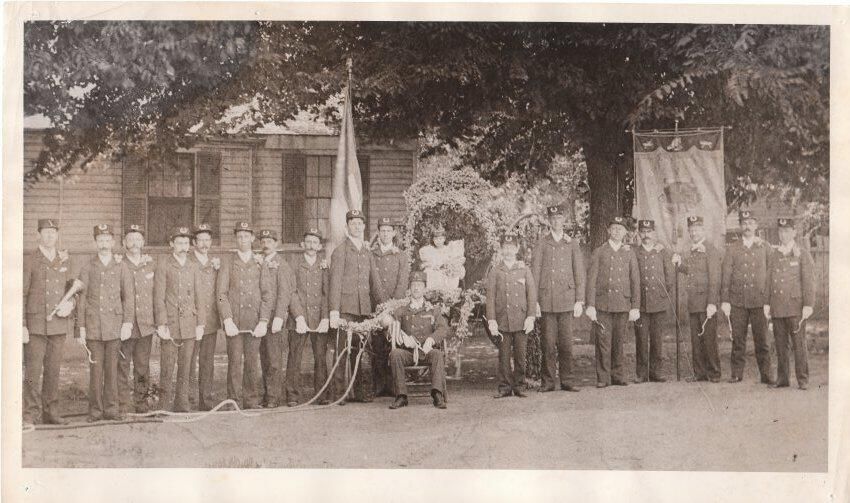
One of their sons, Joseph Levinson, opened Levinson’s Pharmacy on the corner of Main and First Street, where it became a fixture of downtown for decades. It sported the first and only X-ray machine in Napa County for years. Another son, Charlie Levinson, opened his own ready-to-wear clothing store and became a founding member of the Native Sons of the Golden West. He was an active member of the Unity Volunteer Hose Company, a volunteer firefighter organization that served the city of Napa in its early years. Because of his involvement with the Unity Volunteer Hose Company, Charlie Levinson secured a place for Jewish services and ceremonies for Shabbat and the High Holy Days, at the top floor of the fire department. 

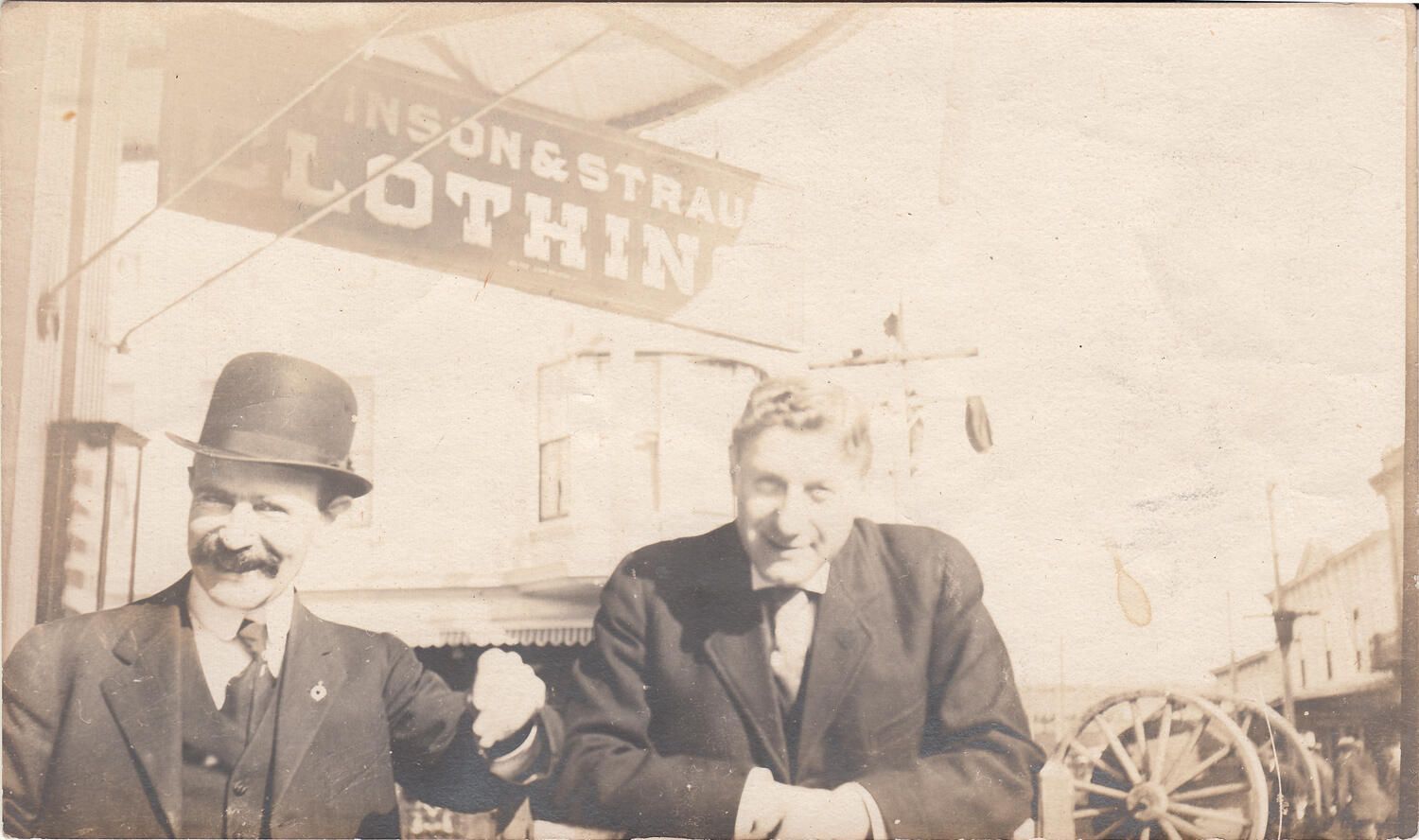
Charles Levinson (left) and Abraham Straus (right) in front of their store, Levinson and Straus, clothiers, at the corner of First and Main Streets, Napa.
The Volunteer Unity Hose Company, July 4, 1896.

Another prominent family in the city of Napa was the Shwarz family. Herman Shwarz arrived in Napa in 1871 and married Elizabeth Fleishman shortly after. Together they opened the Shwarz Hardware Store, which soon became the largest hardware store in the Bay Area. It served Napa, Sonoma, and Solano Counties. Eventually, their three sons, William, David, and Max Shwarz, took over the store. Herman and Elizabeth’s daughter Minnie was given an ornate Queen Anne-style home at 1386 Calistoga Ave in Napa as a wedding present. The beautiful home can still be seen today and has been renovated into La Belle Epoque Inn.

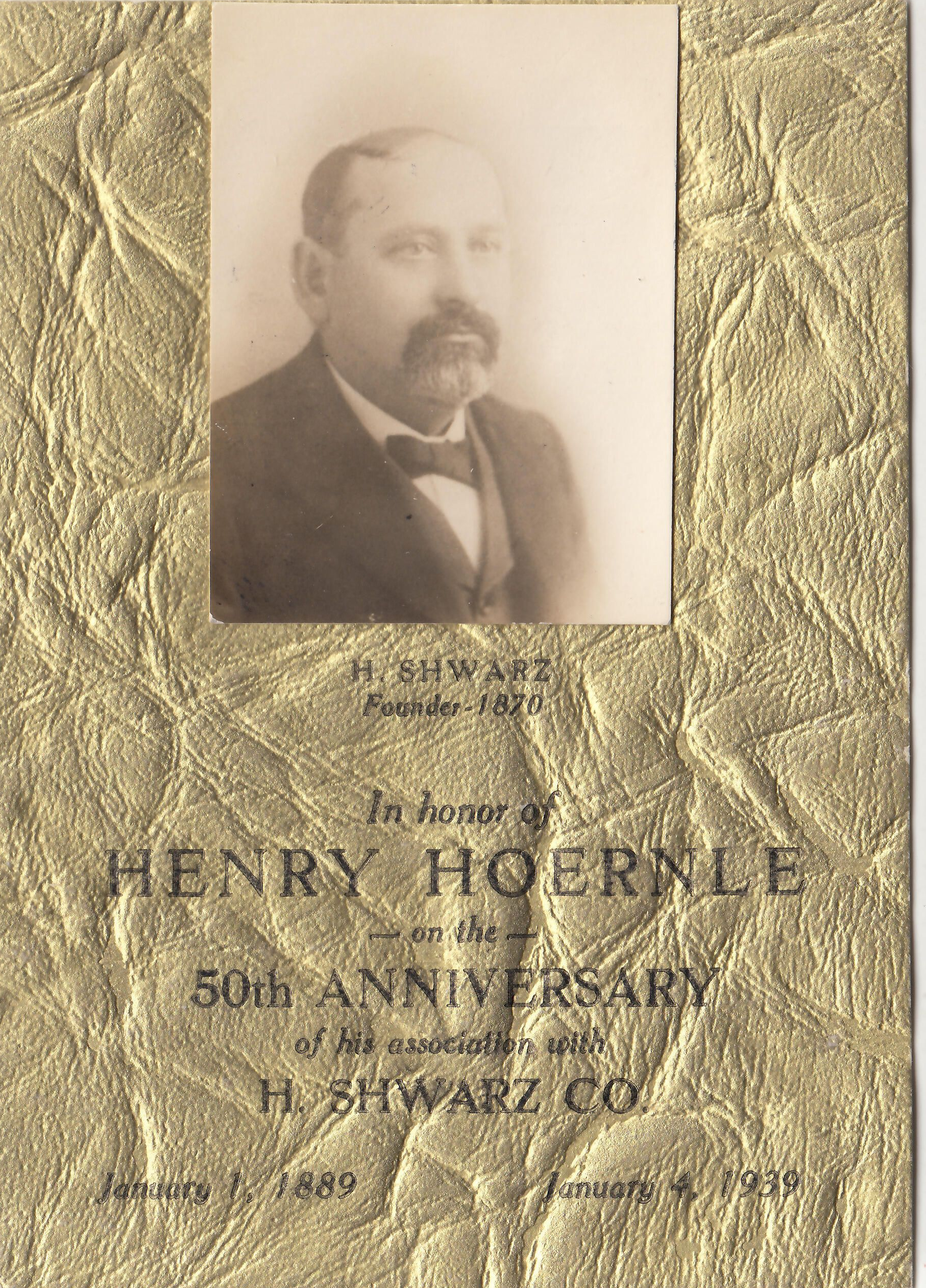
A photograph of Herman Shwarz, founder of Shwarz Hardware, on a commemorative card.

For further information, see Freedman & Dora Levinson: Early Pioneers of Napa, California and Herman Shwarz and Elizabeth Fleishman Shwarz: Early Jewish Pioneers of Napa, California, from the Jewish Museum of the American West, or Images of America: Napa Valley’s Jewish Heritage (Arcadia Publishing, 2012), by Henry Michalski and Donna Mendelsohn for the Jewish Historical Society of Napa Valley.

March 6, 2026
By Lauren Coodley  Originally posted March 7, 2025
By Kelly O'Connor March 3, 2026
Manuscript: "Napa County Place Names" by Ned Soderholm
February 13, 2026
The first settlers came to Napa County about 10,000-12,000 years ago. The Southern Patwin, so-called for their word pat-win, meaning “people," were a southern branch of the Wintun (or Wintu) that occupied most of the land around Suisun, Vacaville, and Putah Creek. [1] Named for the Americanized version of the Spanish word guapo in reference to their brave resistance against the Mexican conquest, the Wappo lived throughout the Sonoma and Napa Valleys.[2] The Wappo spoke a unique dialect of the Yukian language, a group they split off from about 500 or so years prior to white contact. Like the Patwin, the Wappo were hunter-gatherers, consuming local seafood, deer, rabbit, fowl, acorns, and roots. They were famed for their basket-making. “Wappo villages were led by a chief, male or female, who was chosen for life. The villages were usually located along creeks, and were composed of oval grass-thatched houses... [They] were generally very peaceful, except for occasional warfare with the Pomo and struggles against Spanish incursions in the Napa Valley.”[3] The Patwin spoke a dialect of the Penutian language family. Like the Wappo, Patwin men generally wore no clothing and women typically an apron or skirt of shredded bark, tule, or animal skin. “There were numerous Patwin tribelets, consisting usually of a village with several satellite villages...dwellings, sweathouses and dance houses were all semi-subterranean, earth-covered structures.”[4] Many places in Napa County derive their names from Native American words. Suskol and Tulukai were Patwin villages near the Napa River. Suskol became Soscol, and Cayetano Juarez named his rancho Tulucay which Americanos later converted to “Tulocay.” The Wappo villages of Kaimus became George Yount’s Rancho Caymus and the Maiya’kma became Serro de los Mallacomes or the Mayacamas Mountains on the western side of the county. Even the word “Napa” may have come from the Napatos Patwin village. Dr. Edward Bale, who owned Rancho Carne Humana in the upper valley, may have given his land grant that name as a pun on his profession because it translates to “Ranch of Human Flesh.” However, there are two other possible origin theories: it might have referred to the erroneous belief that the local Wappo were cannibals; or it might have been a failed attempt by Bale to write down the pronunciation of the name of the nearby Wappo settlement Colijomanoc or Callajomanas. Anthropologist Alfred L. Kroeber estimated that prior to the incursion of white settlers there may have been nearly 1,000 Wappo in the Napa Valley and more than 12,000 Wintu state-wide. By 1843 there were fewer than 3,000 Wappo and Patwin combined in Napa County, though in 1851 there were nearly 8,000 Wappo throughout Northern California. By the 1970s it was believed that there were only about 50 Wappo left in California.[5] Kroeber reported that there were 22-150 Patwin left in California in 1924, although none were believed to be Southern Patwin; it is unknown how many Southern Patwin are around today.[6] Today the Mishewal Wappo Tribe of Alexander Valley has over 300 members and is the last extant band of Wappo in the area. Most of the 2,500 Wintun now live on rancherias in the North Central Valley.