Rough Rider Manufacturing
Contributed by Lauren Coodley
"My grandma worked there when she was 16. Her maiden name was Marie Bonifacio and she lied about her age in order to work on the machines. I think she said you had to be 18. She was paid by the number of pieces she would complete. She said she was really fast and was usually the top producer.” –Kellie Fuller
Napa’s story was literally knitted together by people's experiences working at the State Hospital, at Mare Island and in factories like Rough Rider. Julian Weidler vividly recounted how he came to Napa to found the company. In 2025 there are still Napans who remember how their families worked there, when Napa produced clothes for the whole country. It seems like another world. Let's visit...
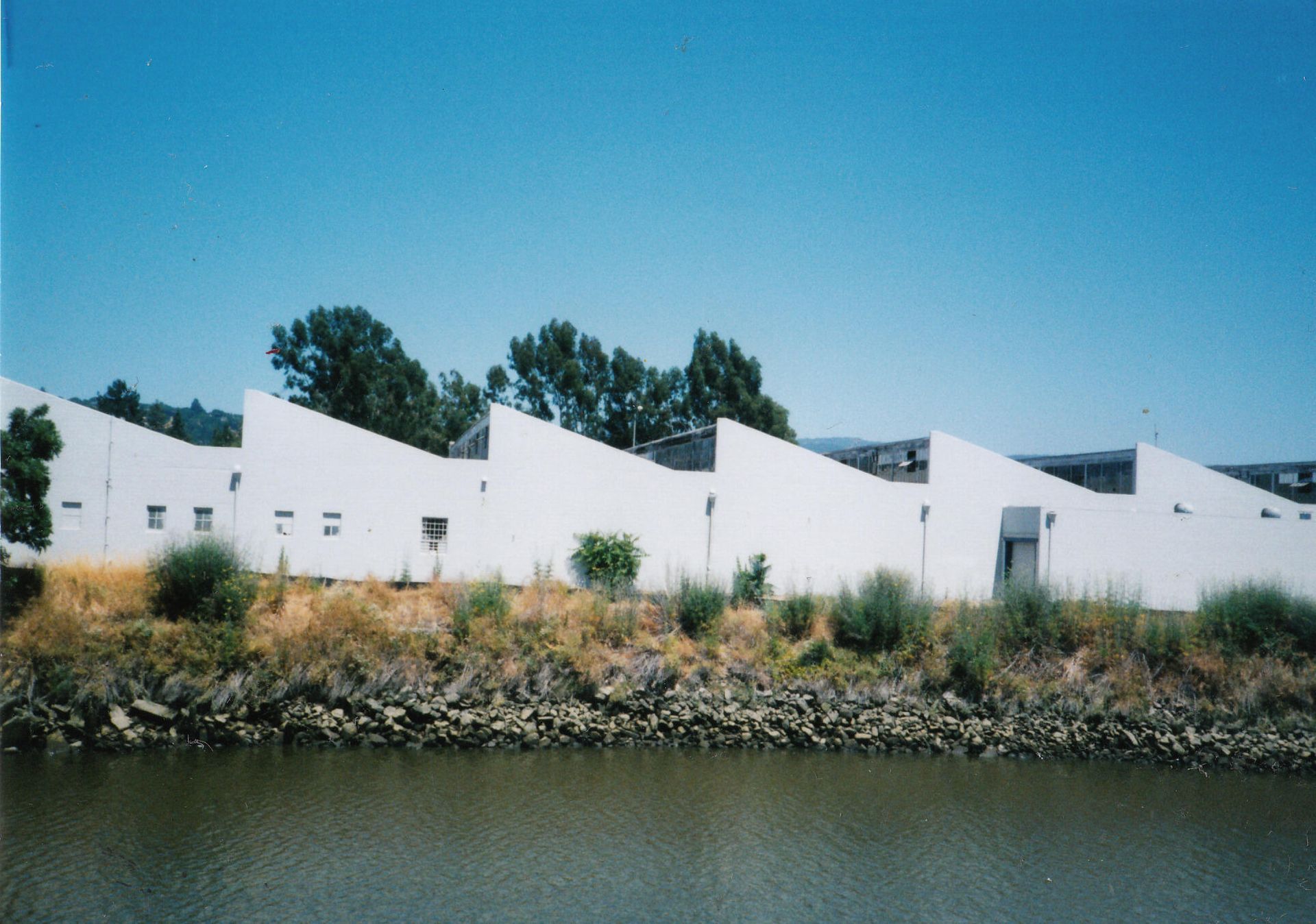
“I used to go see my mom and dad while they worked there, my dad Ed Gulke was a presser there for about 50 years in Rough Riders on Soscol Ave until they closed. I remember my dad being sent home on very hot days. that building had no air conditioner.” -Judy Gulke
Julian Weidler recalled, “I became associated with Rough Rider in 1932 while attending UC Berkeley and living in San Francisco.” He paid for his education by working at the Rough Rider plant in San Francisco where he was paid $40 a month for a 7-day work week. “The Chamber of Commerce told us that if we moved the factory to Napa they would eventually give them this 5000 sq. ft. of land, a lot between the river and the train tracks, on Soscol, half a mile south of Third Street. The chamber raised $40,000 to buy the land and within a couple of years they gave the land to Rough Rider.”
Raw materials were delivered by steamboat to the factory, fashioned into shirts, pants, and skirts, loaded onto freight cars—the Depot was at 3rd and Soscol—and sent across the country. The railroad was connected to the Southern Pacific Railroad; it would take corduroy fabric from Lowell, Massachusetts to the Rough Rider plant. Shipments from Lowell also traveled through the Panama Canal to the San Francisco docks, then up the Napa River on barges to the Rough Rider dock.
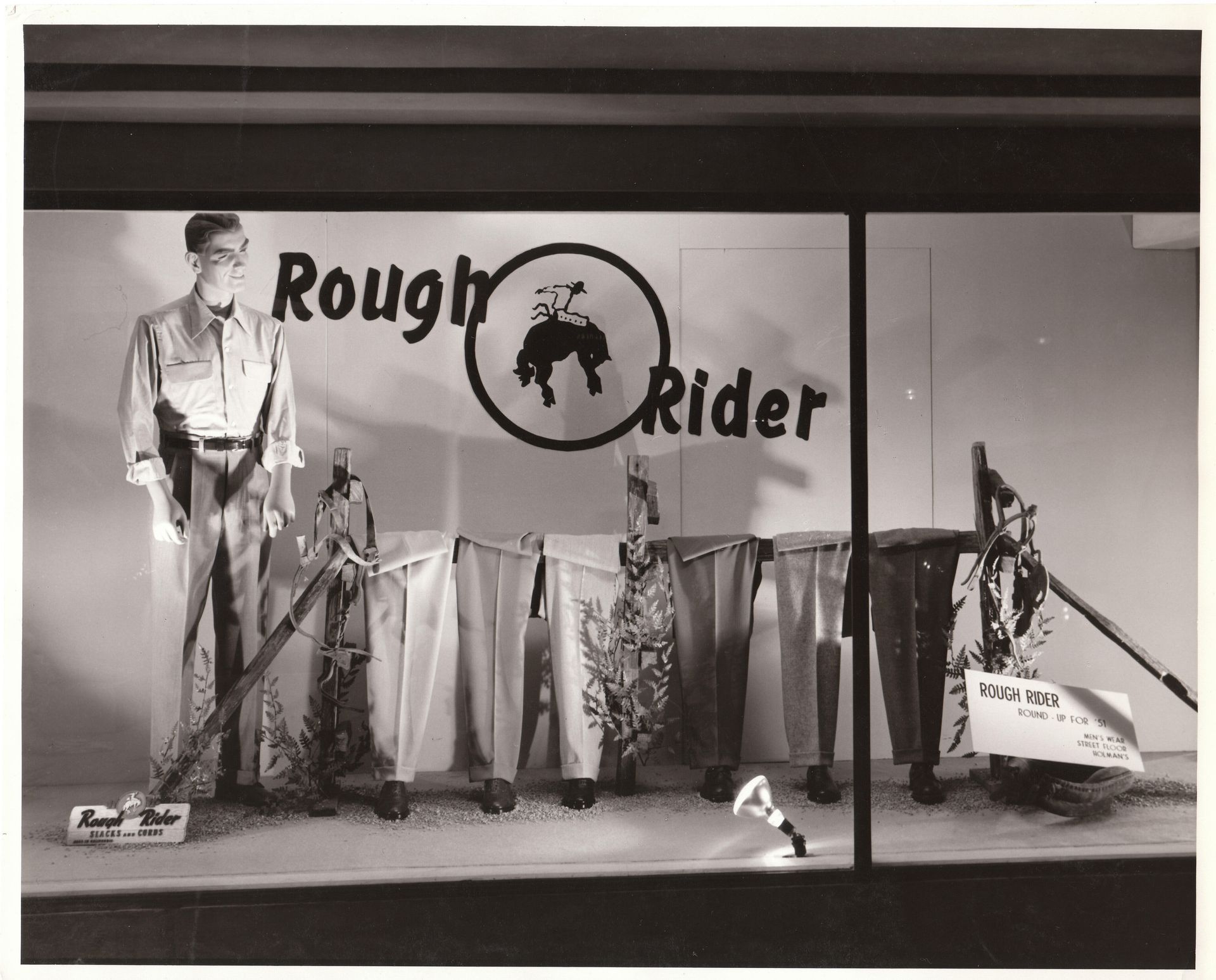
Rough Rider arrived in a town of 10,000 people. The company specialized in corduroy pants, and later sport coats and slacks. Weidler became the chairman and spent his whole life at the factory until it closed in 1977. As he recalled, “The first 35 to 40 people that they brought to Napa thought it was too boring and left. So, they started teaching people how to use sewing machines at the high school and hired right out of school, paying minimum wage for doing what is called piecework. Boys who graduated from Napa High could become apprentices of the trades at Mare Island. Girls were not allowed to do that, so making clothes was a good job for them.”
Eventually, hundreds of workers, mostly women, went on to employment at Rough Rider.
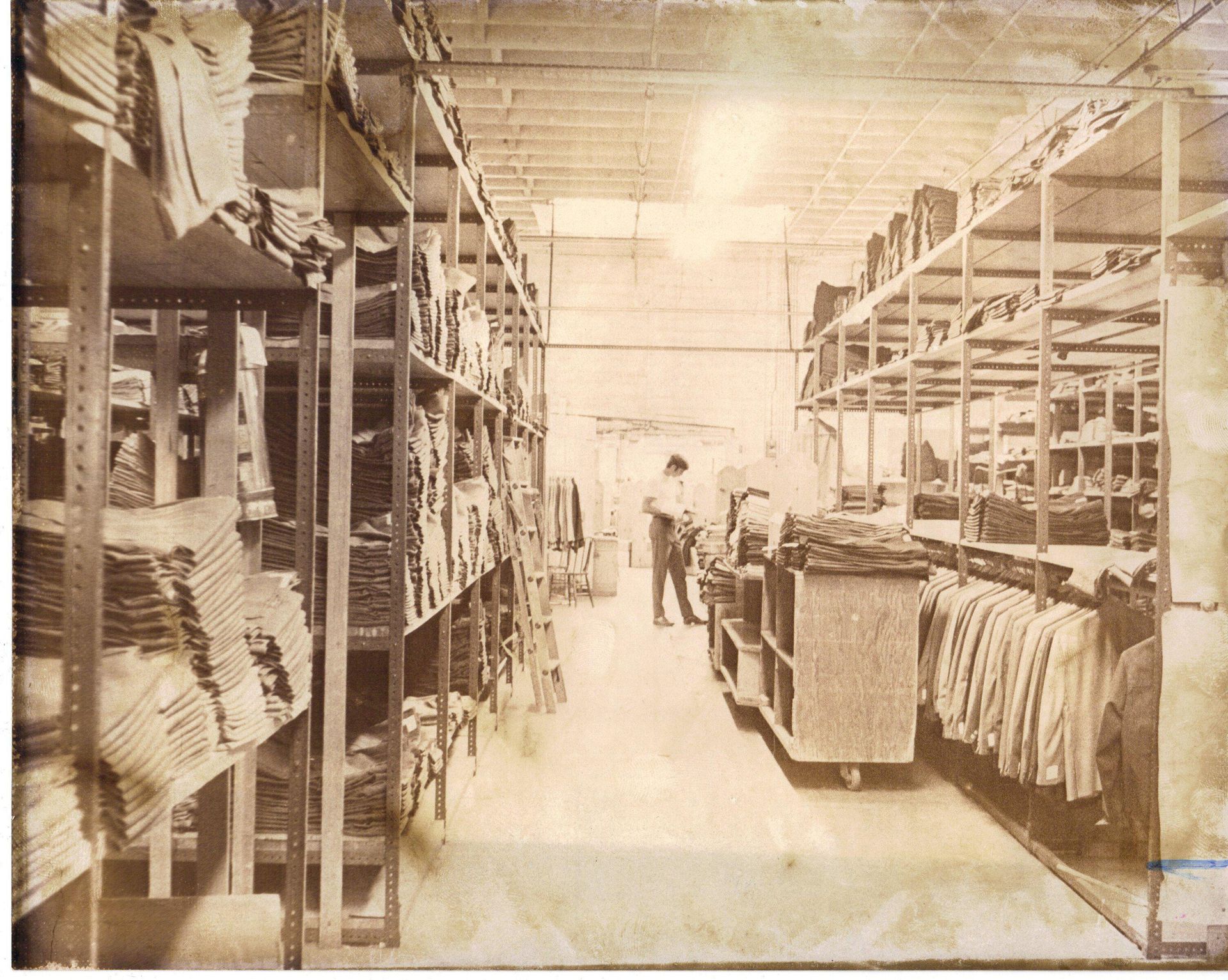
"My Gramma, Ruth Stukey worked there for 35+ years. She worked in the factory sewing as well as a treasurer for the Garment Workers Union. My Dad, Ron Stukey worked there from his early 20s, 1953-ish, till it closed in the ‘70s. [I have] fond memories of exploring the factory as a child. My dad was a shipping clerk. I remember the very tall stacks of slacks. I would go in the area where the ’cutters’ would be cutting many layers of fabric. The ‘pressers’ with giant steam machines. And then all the women, including my Gramma, sewing very fast.” -Stacey Flukey
Weidler explained: “In the 1930’s, a lot of customers couldn’t pay their bills and were able to run a bill for a year. Thus no banks were closed in Napa, people lived off the land and the plant became unionized in the 40s with the ILGWU (International Ladies Garment Workers Union) and we had a cordial relationship.” The Rough Rider Cookbook was published by the United Garment Workers. Along with recipes, this cookbook offers a list of unionized occupations in Napa, which included bartenders, retail clerks, musicians, dried fruit packers, barbers, cleaners, carpet layers, and grain processors.
"I remember going there for a tour when I was in the Girl Scouts. We saw the cutting and sewing. There was also a book binding area in the building. They showed us how books were restored and re-bound. An amazing place to visit.” -Valerie Exum
In 1955, Rough Rider bought the Cameron shirt company on Oak Street and made shirts for the military. Stephanie Vatz writes: “In 1960, an average American household spent over 10 percent of its income on clothing and shoes—equivalent to roughly $4,000 today. The average person bought fewer than 25 garments each year. And about 95 percent of those clothes were made in the United States.” Donald Grassman remembers that “as a Napan in the ‘60s it was the place to go for a beautifully fitted suit at a fair price.” Vera Gilpin adds: “As contestants in the Miss Napa County pageant in 1967, we received tailored pant suits to wear for various pageant functions. Green plaid, if I remember correctly.”
Sydney Allen wrote an article about Rough Rider for the San Francisco Chronicle in the 1960s where he described the employees as “casual and friendly” and cited “the revolution in male apparel. Rough Rider grasped the technology of tailoring knits and was into the fray all the way. ‘We can't keep up with the present demand,’ says Weidler. ‘We're exploring the question of expanding the factory right now. Our business this year is up 40%.’” The author concluded that “Rough Rider is shooting for $10 million volume this year, enough to rationalize any little spread of Napa fever.” By 1970, Rough Rider was one of the four largest private industries in the valley.

“I worked at the coat factory on Oak St. in the ‘70s. I started out as a ’bundle boy’ where I worked in the sewing area of around 20 sewing ladies and would walk around and pick up and move bundles of coats from one seamstress to the next. Then was moved to ’presser’ where I pressed the completed coat shoulders in steam presses. That position was ’piece work,’ where the more coats I could press, the more money I would make. I also worked briefly in the ‘cutting room,’ where I laid out stacks of coat material from rolls of material then cut out different parts of a coat with a pattern laid on top using a tool kind of like a jigsaw with a 9-inch razor sharp blade on it.” –Larry Scott, Jr.
Rough Rider still employed more than seven hundred people. Barry Nelson recalls: “My dad and grandma worked there! I used to go visit my dad and was amazed at the process—he was a cutter—cut scraps of fabric into a pattern, which was then sent over to the gals on the sewing machine.” But the mid-1970s saw the emergence of large textile mills and factories in China and other developing countries in Asia and Latin America. These operations offered cheap labor and raw materials, as well as the capacity to quickly manufacture huge orders.
By the late ‘70s, women's and men's garment industries had begun to shrink. By 1980, even though about 70% of the clothing Americans bought was still made domestically, a handful of big retail chains like Gap, Inc. and J.C. Penney began transitioning away from making their own clothes. Instead, they increasingly designed and marketed them, but outsourced production factories overseas, where the work was done at a tiny fraction of the cost.
“I inherited 5 of my uncle's Rough Rider shirts that he bought in the 1950s and wore to death, the shirts are still flawless.” -Frank Murphy
After 1977 when Rough Rider closed its Napa operations entirely, other Napa factories shut down one by one: Kaiser Steel’s Napa plant was sold in 1987, and Sawyer Tannery closed permanently in 1990. With the clanging shut of the great doors, the leveling of the buildings, and the transition of blue-collar workplaces to art galleries and tourist centers, scores of workers were displaced-- and young high school graduates lost the opportunity to work at manufacturing jobs.
The Rough Rider building was leveled in August 2002 so the eastern bank of the Napa River could be widened with marsh and terraces.
Sources:
Vatz, S. (May 24, 2013). Why America Stopped Making Its Own Clothes - The Lowdown. KQED (Online). https://www.kqed.org/lowdown/7939/madeinamerica
Lauren Coodley Interview with Julian Weidler (2003), included in Napa: the Transformation of an American Town by Lauren Coodley with Paula Amen Schmitt, Foreword by Carol Kammen, (2007).
Social Media posts courtesy of their authors; many thanks!
From the Silver Screen to the Golden Gate: The Epic Journey of Alexis Merab (by Dr. Mari Chikvaidze)